
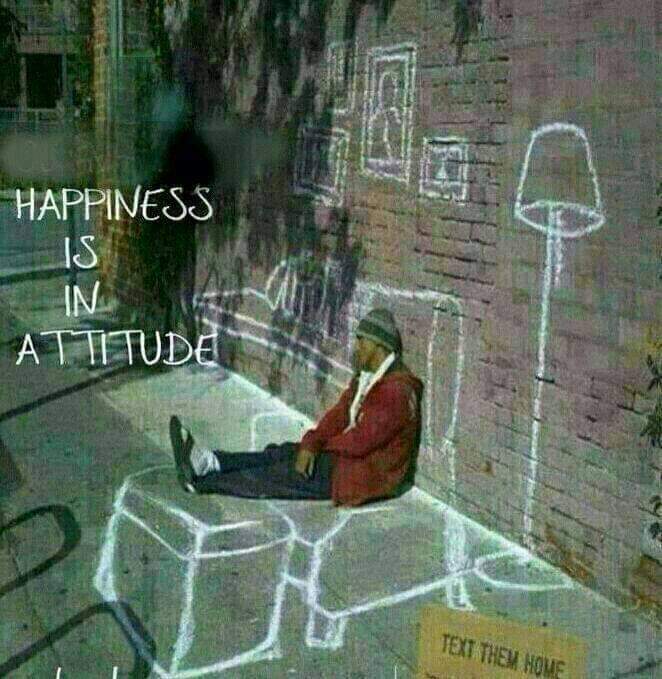
CAN YOU TALK TO US MORE ABOUT CELEBRATION? IS IT POSSIBLE TO CELEBRATE MISERY?
It is possible because celebration is AN ATTITUDE.
Even about misery you can take an attitude of celebration. For example: you are sad — don’t get identified with sadness. Become a witness and enjoy the moment of sadness, because sadness has its own beauties. You have never watched. You get so identified that you never penetrate the beauties of a sad moment. If you watch, you will be surprised at what treasures you have been missing.
Look — when you are happy you are never so deep as when you are sad. Sadness has a depth to it; happiness has shallowness about it. Go and watch happy people. The so-called happy people, the playboys and playgirls — in clubs, in hotels you will find them, in theatres — are always smiling and bubbling with happiness. You will always find them shallow, superficial. They don’t have any depth. Happiness is like waves just on the surface; you live a shallow life. But sadness has a depth to it. When you are sad it is not like waves on the surface, it is like the very depth of the Pacific Ocean: miles and miles to it.
Move into the depth, watch it. Happiness is noisy; sadness has a silence to it. Happiness may be like the day, sadness is like the night. Happiness may be like the light, sadness is like darkness. Light comes and goes; darkness remains — it is eternal. Light happens sometimes; darkness is always there.
If you move into sadness all these things will be felt. Suddenly you will become aware that sadness is there like an object, you are watching and witnessing, and suddenly you start feeling happy. Such a beautiful sadness! — a flower of darkness, a flower of eternal depth. Like an abyss without any bottom, so silent, so musical; there is no noise at all, no disturbance. One can go on falling and falling into it endlessly, and one can come out of it absolutely rejuvenated. It is a rest.
It depends on the attitude. When you become sad you think that something bad has happened to you. It is an interpretation that something bad has happened to you, and then you start trying to escape from it. You never meditate on it. Then you want to go to somebody: to a party, to the club, or put the T.V. on or the radio, or start reading the newspaper — something so that you can forget. This is a wrong attitude that has been given to you — that sadness is wrong. Nothing is wrong with it. It is another polarity in life.
Happiness is one pole, sadness is another. Blissfulness is one pole, misery is another. Life consists of both, and life is a ritual because of both. A life only of blissfulness will have extension, but will not have depth. A life of only sadness will have depth, but will not have extension. A life of both sadness and blissfulness is multi dimensional; it moves in all dimensions together. Watch the statue of Buddha or sometimes look into my eyes and you will find both together — a blissfulness, a peace, a sadness also. You will find a blissfulness which contains in it sadness also, because that sadness gives it depth. Watch Buddha’s statue — blissful, but still sad. The very word ‘sad’ gives you wrong connotations — that something is wrong. This is your interpretation.
To me, life in its totality is good. And when you understand life in its totality, only then can you celebrate; otherwise not.
Celebration means: whatsoever happens is irrelevant — I will celebrate. Celebration is not conditional on certain things:’When I am happy then I will celebrate,’ or, ‘When I am unhappy I will not celebrate.’ Celebration is unconditional; I celebrate life. It brings unhappiness — good, I celebrate it. It brings happiness — good, I celebrate it. Celebration is my attitude, unconditional to what life brings. But a problem arises because whenever I use words, those words have connotations in your mind. When I say ‘Celebrate’, you think one has to be happy. How can one celebrate when one is sad? I am not saying that one has to be happy to celebrate. Celebration is gratefulness for whatsoever life gives to you. Whatsoever God gives to you, celebration is a gratitude; it is a gratefulness.
I have told you and I will tell you again….
A Sufi mystic was very poor, hungry, rejected, tired of the journey. He went to a village in the night and the village wouldn’t accept him. The village belonged to the orthodox people, and when orthodox people are there it is very difficult to persuade them. They wouldn’t even give him shelter in the town.
The night was cold and he was hungry, tired, shivering with not enough clothes. He was sitting outside the town under a tree. His disciples were sitting there with great sadness, depression, even anger. And then he started praying and he said to God, ‘You are wonderful! You always give me whatsoever I need.’ This was too much.”
A disciple said, ‘Wait, now you are going too far, particularly on this night. These words are false. We are hungry, tired, with no clothes, and a cold night is descending. There are wild animals all around and we are rejected by the town, we are without shelter. For what are you giving your thankfulness to God? What do you mean when you say, “You always give me whatsoever I need?”‘
The mystic said, ‘Yes, I repeat it again: God gives me whatsoever I need. Tonight, I need poverty, tonight I need being rejected, tonight I need to be hungry, in danger. Otherwise, why should He give it to me? It must be a need. It is needed and I have to be grateful. He looks after my needs so beautifully. He is really wonderful!’
This is an attitude that is unconcerned with the situation. The situation is not relevant. Celebrate, whatsoever the case. If you are sad, then celebrate because you are sad. Try it. Just give it a try and you will be surprised — it happens. You are sad? — start dancing because sadness is so beautiful, such a silent flower of being. Dance, enjoy, and suddenly you will feel that the sadness is disappearing, a distance is created. By and by, you will forget sadness and you will be celebrating. You have transformed the energy. This is what alchemy is: to transform the baser metal into higher gold. Sadness, anger, jealousy — baser metals can be transformed into gold because they are constituted of the same elements as gold…
You are sad? — start singing, praying, dancing. Whatsoever you can do, do, and by and by, the baser metal is changed into a higher metal — gold. Once you know the key, your life will never be the same again. You can unlock any door. And this is the master key: to celebrate everything.
I have heard about three Chinese mystics. Nobody knows their names. They were known only as the ‘Three Laughing Saints’, because they never did anything else; they simply laughed. They moved from one town to another, laughing. They would stand in the market place and have a good belly laugh. The whole market-place would surround them. All the people would come, shops would close and customers would forget for what they had come. These three people were really beautiful — laughing and their bellies waving. And then it would become an infection and others would start laughing. Then the whole market-place would laugh. They had changed the quality of the market.
And if somebody would say, ‘Say something to us,’ they would say, ‘We have nothing to say. We simply laugh and change the quality.’ When just a few moments before, it was an ugly place where people were thinking only of money — hankering for money, greedy, money the only milieu around — suddenly these three mad people came, and they laughed and changed the quality of the whole marketplace. Now nobody was a customer. Now they had forgotten that they had come to purchase and sell. Nobody bothered about greed. They were laughing and they were dancing around these three mad people. For a few seconds a new world opened.
There is no end to life, there is always a new beginning, a resurrection. If you change your sadness to celebration, then you will also be capable of changing your death into resurrection. So learn the art while there is still time. Don’t let death come before you have learned the secret alchemy of changing baser metals into higher metals. Because if you can change sadness, you can change death. If you can be celebrating unconditionally, when death comes you will be able to laugh, you will be able to celebrate, you will go happy. And when you can go celebrating, death cannot kill you. Rather, on the contrary you have killed death. But start it, give it a try. There is nothing to lose. But people are so foolish that even when there is nothing to lose, they won’t give it a try. What is there to lose?
If you are sad, then I say celebrate, dance, sing. What are you to lose? At the most, sadness will be lost, nothing else. But you think it is impossible. And the very idea that it is impossible will not allow you to give it a try. And I say it is one of the most easy things in the world, because energy is neutral. The same energy becomes sadness; the same energy becomes anger; the same energy becomes sexuality; the same energy becomes compassion; the same energy becomes meditation. Energy is one.
You don’t have many types of energies. You don’t have many separate pockets of energy where this energy is labelled ‘sadness’ and this energy is labelled ‘happiness’. Energies are not pigeon-holed, they are not separated. There exists no watertight compartment in you. You are simply one. This one energy becomes sadness, this one energy becomes anger. It is up to you.
One has to learn the secret, the art of how to transform energies. You simply give a direction and the same energy starts moving. And when there is a possibility of transforming anger into bliss, greed into compassion, jealousy into love… you don’t know what you are losing. You don’t know what you are missing. You are missing the whole point of being here in this universe. Give it a try.
Osho: Yoga: The Alpha and the Omega, Vol 4: Chapter #10: Chapter title: The alchemy of celebration. (excerpts)
दु:ख में सुमिरन सब करै,
सुख में करै न कोय।
जो सुख में सुमिरन करै,
तो दु:ख काहे को होय॥ – कबीर
Dukh Mein Simran Sab Kare, Sukh Mein Kare Na Koye
Jo Sukh Mein Simran Kare, Tau Dukh Kahe Ko Hoye – Kabir
In anguish everyone prays to Him,
in joy does none
To One who prays in happiness,
how can sorrow come
Kabir’s couplet takes this understanding a step further. We often remember the Divine when life becomes difficult –“दु:ख में सुमिरन सब करै”—because suffering naturally turns us inward. But Kabir asks us to remember even when life is overflowing with happiness: “जो सुख में सुमिरन करै, तो दु:ख काहे को होय।” Perhaps this is what it truly means to celebrate life – not to celebrate only when things go our way, but to remain connected to the whole of life, in joy as well as sorrow. And this is beautifully echoed in the timeless song from Dosti, (1964) – “राही मनवा दुःख की चिंता क्यों सताती है, दुःख तो अपना साथी है।” The song does not deny sorrow or ask us to run away from it; it gently reminds us to accept it as a companion on the journey. If happiness is a guest and sorrow is a companion, then perhaps celebration is the attitude with which we welcome both.
दुःख तो अपना साथी है : Dukh To Apna Sathi Hai : Mohammed Rafi | Dard Bhara Geet | Old Hindi Song
Very thoughtful way … how to celebrate sadness … really new way of celebration… respect 🫡
Grateful to you and your great efforts .. great thnx for sharing 🙏
Beautifully said.. Celebration is indeed an attitude. Its not about the event happening in your life. It may be a sad event or a happy one. How you choose to look at it, your point of view makes all the difference! If only you learn to celebrate both, like the Sufi mystic, you can be ever blissful. It seems people have started to understand this which is why the announcements for prayer meetings for many deceased read.. “To celebrate the life of..” To recall and celebrate the good things about, and in the life of the Dear Departed.
Very well said Sir..
What a great inspirations to come out of sadness. However I feel we should add habit of SURRENDER..
Now, what I mean is if we start thinking , we are the DOER..than all this problems arise..but instead we believe whatever is happening, whether Happiness or Sadness..it’s done by HIM..the Supreme power and I accept as His wish..
This is SURRENDER..though one should practice regularly to enjoy benefits of this..
Let’s all try n see if it works?..
Kind regards..
Rajesh..🌹🙏
When I convey my happy moments to others it is celebration… when I appreciate success and achievements of my friends or family it is celebration…in return you feel happy and contented.