
SHIBLI WENT TO VISIT ANOTHER GREAT SAGE, JUNNAID. THE WIFE OF JUNNAID WAS ABOUT TO CONCEAL HERSELF MODESTLY BEHIND A SCREEN.
JUNNAID SAID: STAY WHERE YOU ARE – SHIBLI IS ABSENT. AT THAT MOMENT SHIBLI BEGAN TO WEEP. JUNNAID SAID TO HIS WIFE: YOU MUST NOW BE ABSENT, FOR SHIBLI HAS RETURNED.
You are filled too much. There is no room, no space for God to enter in you. You are too crowded. A thousand I’s milling inside – they don’t leave any space for anything to enter in you. That’s why you go on missing that which is always present.
This is the arithmetic of spirituality: If YOU are present, you will miss the divine. If YOU are absent, only the divine is, nothing else exists. God may be absent if you are present. God will be present if you are absent.
So the whole effort of a seeker is how to be NOT present, how to become an absence. Absence is meditation. That space where you exist but not as an ‘I’, not focused in the ego, unfocused, not centered anywhere… you exist without a center, an empty house, a temple, not even the worshipper inside – suddenly, God is there! God has always been there, not even for a single moment was he absent. But you were too much present. Your presence is the barrier.
Self-consciousness is the barrier. Self-unconsciousness is the gate. And remember, self-unconsciousness means unself-consciousness. Self-unconsciousness is the highest form of consciousness. It is unself-consciousness: consciousness exists, but there is nobody in it. The self has disappeared, melted away, has been absorbed. You are and yet you are not.
The whole exists in the part. The part exists in the whole. In fact, part and whole are not two things. You cannot draw a dividing boundary. The part melts into the whole and the whole melts into the part.
But you have become too much of the part; you have chosen, you have become a self. And you have completely forgotten the no-self. You have become too much of a presence, and you don’t have absence; hence, you have lost the music. You have become a discord. The same notes can become a disharmony – only a new arrangement is needed.
You cannot destroy the part, because in fact the part never belonged to you – who are you to destroy it? The part belongs to the whole, how can you destroy it? You never created it. Can you create the ego? If you cannot create the ego, how can you destroy it? Don’t be stupid.
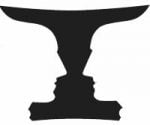
All that you can do is to create a GESTALT or to destroy a gestalt. This German word is beautiful. Out of this word a whole attitude towards life has arisen – gestalt psychology. It is meaningful, tremendously meaningful. There is no way to translate this word into English or into any other language. Gestalt means: the relationship between the figure and the ground.
Gestalts change. For example, I am talking to you. Then everything else that is going on around – the airplane, the constant singing of the birds, chirping, the movement of the wind in the trees, the traffic noise – everything has become the background, the field. You are listening to me, attentive to me – my words have become the focus. You are focused on my words, on me. That has become the figure.
But if I stop, suddenly the gestalt disappears. You start listening to the birds, to the noise around. The gestalt has disappeared. Gestalt means when you pay attention to something it becomes important, and everything else becomes just the background. It does not disappear, it is there; the chirping of the birds is there even while I am talking. Even while you are listening, it is there, it has just gone a little back, stepped a little back to the boundary. It has become the very background.
You are concentrated towards me. This has become the gestalt.
Gestalts go on changing. A child has a different gestalt of the world. If you give him a flower and a one hundred rupee note, he will take the flower.
I used to know a beggar in my town who was always sitting under a tree near the river. And it had become a joke, not only in the town but all around in the surrounding towns, that people would offer him one anna or a one rupee note, and he would always choose the one anna, he would never choose the one rupee note. Even if you offered a hundred rupee note and one anna, and gave him the choice – ”Whatsoever you want between the two you can take” – he would take the one anna piece. It had been going on for years.
Once I asked that old man, ”You must know the difference by now, and you don’t seem so foolish – why don’t you choose the hundred rupee note if somebody is offering it?”
He said, ”Then the whole game will be lost. Then they won’t give me even one anna. They enjoy my foolishness, but I am not so foolish. Don’t tell me that I should choose the hundred rupee note. I can choose it, but only once; then nobody is going to play the game. They enjoy my foolishness and my emotions. I am not so foolish as they think. For twenty years I have been living on the game. I always choose the smallest coin they offer, and they enjoy and they laugh at my foolishness. But I am not a foolish man.”
A child will choose the flower. He is not foolish, his gestalt is different. A hundred rupee note doesn’t mean anything, he has not yet come to the world of the market where a hundred rupee note means something. But if you offer him a plain paper or a hundred rupee note, he may choose the hundred rupee note, not because it is a hundred rupee note, but because it is painted, colored. He has a different gestalt.
A young man has a different gestalt, an old man has a different gestalt. That’s why there is the gap between generations – they have different gestalts, and gestalts go on changing. They not only change over the years, every moment they go on changing. This morning you were so loving, and now you are so angry, your gestalt was different. When you were loving anger disappeared into the background, love came into focus. Now you are angry, love has gone to the background and anger has come into focus.
But nothing disappears, remember. Everything remains, always remains. Only gestalts change.
Something comes up, something goes down; something surfaces, something goes to the bottom. But nothing disappears, nothing CAN disappear. Everything is everlasting and eternally everlasting.
Everything always is. That’s what Hindus call NAAM RUPA. This Hindi word, naam rupa, can give a little feeling and nuance of gestalt. Hindus say only name and form change; otherwise, reality remains the same.
So don’t try to kill the ego – you cannot. If you try to kill the ego you will become a very very humble man, but remember, ”very very” is important. You cannot be an ordinary humble man but very very humble – and that will be the hiding place of your ego. Then you will claim that you are the humblest man on earth.
The gestalt has changed. The ego has gone to the bottom but starts functioning from there. Now you are humble, but at the top. A humble man has to be last; how can he be at the top? But a humble man always claims that he is at the top. The ego is not dead, cannot be dead. It has only gone to the deeper layers of the unconscious and functions from there and controls from there. Humility on the surface and ego deep down, controlling humility. Humbleness is controlled by the ego.
Look at people who say and think that they are humble, look in their eyes: you will not find any humbleness there, but a very subtle pride. Pious egoists they are, holy egoists they are. And when ego becomes holy it becomes more poisonous. Poison in itself is bad, but when poison becomes holy then it is very dangerous.
You cannot kill the ego. If you try to kill it, two things will happen. One, your life will become monotonous, it will lose the tension of the opposites. It will lose the music. That’s why monks are so monotonous.
God is alive, near in the trees, in the clouds, in the birds chirping! God IS life, and life depends on duality. Of course, it is not only duality, it is a deep harmony between the two, between the many. It is one manifesting as many.
Don’t try to kill the ego; otherwise, you will suppress it, and you will miss the whole point of being alive here. You will miss the whole opportunity.
Then what to do? Just change the gestalt. Don’t be identified with the part – because you are also the whole. And don’t be identified with the whole – because you are also the part.
To cut it short: Don’t be identified at all.
You are both and neither, and that is transcendence. Then suddenly you are absent, and everything is present. Nothing is lost. But when you lose identification the feeling of ’I’ is lost. You remain, you remain more than ever, you are more than ever, your being is infinitely rich. Without identification, the I disappears. But the I is getting identified either with the part – that is the I of the worldly man – or getting identified with the whole; that is the I of the so-called religious man.
Now this small anecdote.
SHIBLI WENT TO VISIT ANOTHER GREAT SAGE, JUNNAID.
This must have happened before Shibli became an enlightened man himself. Junnaid was already a perfect master, but Shibli was still on the path, still moving towards the perfect illumination of being.
He was not a beginner, that’s right, he was already an adept. But the journey had not ended yet – far advanced on the path, but the journey not yet complete.
SHIBLI WENT TO VISIT ANOTHER GREAT SAGE, JUNNAID. THE WIFE OF JUNNAID WAS
ABOUT TO CONCEAL HERSELF MODESTLY BEHIND A SCREEN.
As is the custom with Muslims, the wife tried to conceal herself behind a screen (parda) as she should do for ordinary mortals.
JUNNAID SAID: STAY WHERE YOU ARE – SHIBLI IS ABSENT.
There is no need to hide yourself, because nobody has come. When I say nobody has come, I mean two things. One, NOBODY has come, he who is a nobody; and second, nobody has come – Shibli has come but there is nobody like Shibli in him.
STAY WHERE YOU ARE – SHIBLI IS ABSENT.
Nothing has happened, as if Junnaid is sitting with his wife and nobody has entered. What do you do when a breeze enters the room and passes by? You don’t hide behind a screen. Or if a sun ray penetrates, you don’t hide. ”No, need to hide,” said Junnaid. ”Shibli is coming, but he is deeply absent inside.”
At that moment when Shibli entered, he was not identified with himself; a non-identifiable being without any gestalt coming in like a breeze comes in – unobtrusively. Not even giving a feeling: What is happening? As if a drunk man comes in, drifts in, rather, because there is nobody who is coming in. It may be better to say, Shibli DRIFTED into the room of Junnaid. The wife started hiding herself.
Said Junnaid: STAY WHERE YOU ARE – SHIBLI IS ABSENT. AT THAT MOMENT SHIBLI BEGAN TO WEEP.
The identification entered immediately. A gestalt formed; he is no more the same. Just this being said, that Shibli is absent, must have brought the ego back. So much appreciation by a great sage like Junnaid!! Even a look from Junnaid would have gratified you tremendously. And a man like Junnaid said, ”Stay – Shibli is absent.”
This is the highest appreciation that can be given for people who are on the path. This is the greatest achievement – when a man is absent. Nothing more is there then, because when you are absent, God is present. In fact Junnaid said, ”Don’t be worried. Shibli is not coming, God is entering.” It is the same. To say that Shibli is absent is to say that God is present. And where can you hide from God? And what is the need to hide from him? – because God is nothing but your purest being.
Immediately the gestalt came in.
AT THAT MOMENT SHIBLI BEGAN TO WEEP.
Why did he begin to weep? Immediately, when he was appreciated by Junnaid, the ego came back.
Immediately he felt: Yes, I am absent – and the ‘I’ was there. God disappeared.
The gestalt takes no time to form. Just a look and the gestalt forms. It is constantly being created and being destroyed. That is the only thing you can create and destroy, you can do nothing else. It is just like waves coming high and falling down.
At the peak was Shibli, at the peak of absence. The moment he heard Junnaid saying, ”Shibli is absent,” and, ”Shibli has not come, nobody has entered. It is God, look. Where are you hiding?” – hearing this, the ego entered, jumped back in. A gestalt formed: ”So I have achieved? So I have entered? So Junnaid has certified, recognized me?” Everything is lost.
Junnaid played a trick. In fact, the wife was not the concern. He tried a trick on Shibli and helped him to see what was happening to him.
From the peak Shibli has fallen into the abyss. Just a second before he was the divine; now he is just a worm on the earth, an ordinary mortal, fallen from immortality. Just a moment before he was in the garden of Eden, and just a moment afterwards he is thrown out, expelled. The peak has gone far away. Even to dream about it will be difficult now.
It happened in that moment to Shibli. He was floating in a different world; altogether different was the quality of his being, a different dimension. He was not part of this world; he was floating high like clouds, and suddenly he has fallen. A cloud has fallen into the dust – a sudden fall. The ego has arisen.
Junnaid did well. And he has not even uttered a single word to Shibli – he was talking to his wife – but he created a situation. This is how Sufis work. They create situations very deliberately.
AT THAT MOMENT SHIBLI BEGAN TO WEEP.
Why is he weeping? He is weeping for his own fall. He became aware of what Junnaid had done: not even uttering a single word to him, he had penetrated him so deeply. He provoked his ego. Shibli started weeping. Again he is present and God is missed. No more is he a child, no more in ecstasy. The samadhi has disappeared.
JUNNAID SAID TO HIS WIFE: YOU MUST NOW BE ABSENT, FOR SHIBLI HAS RETURNED.
Don’t come out. Now there comes an ordinary man, just an ordinary man, filled with lust and greed and sex, filled with anger, jealousy, ego. Here comes an ordinary mortal. Now you hide yourself, don’t come out.
You are both; that’s why this can happen. You are both the peak and the valley; that’s why this can happen. You are the expelled Adam, and the father who expelled him. You are both; that’s why it can happen. Otherwise, how is it possible to come from the peak to the valley so suddenly and so immediately in a single moment? How is it possible if you are not both?
Both these extremes are yours: the devil and the divine. You will weep when you get identified with the devil, because you cannot be blissful with the devil. With the part you will weep. With the whole, if you get identified, you may feel happier, but that identification also cannot last forever – a Junnaid can bring it immediately back. A man who knows the art can throw you back. No, don’t get identified.
Where did Shibli miss? What was the point of his misfortune? He was getting identified with the idea of his liberation, freedom, enlightenment. He had forgotten completely that the ego existed; it had just moved into the background, but it was there. And you can be a victim again. Just a slight provocation and the gestalt will change: the figure will become the background and the background will become the figure. A small change, just a slight change. This man Junnaid must have been the greatest gestalt psychologist.
Seasons come and go, consciousness remains. Childhood comes and goes, youth comes and goes, health and disease; consciousness remains. That which remains always is God. That which passes is the world. That which comes and goes is not you.
You are the witness, to whom things happen but who remains a witness. Witnessing is the art of non-identification, and non-identification is all. Non-identification is all there is to meditation. It is the whole meditation.
It is said that this situation created by Junnaid helped Shibli, and after a few days, just after a few days, he himself became enlightened.
Osho: Just Like That: CHAPTER 9. WHEN SHIBLI IS ABSENT
दीवारें छोटी होती थीं लेकिन पर्दा होता था
तालों की ईजाद से पहले सिर्फ़ भरोसा होता था……………..अज़हर फ़राग़
dīvāreñ chhoTī hotī thiiñ lekin parda hotā thā
tāloñ kī ījād se pahle sirf bharosa hotā thā………………..Azhar Faragh
Walls used to be lower, but there was always a curtain.
Before locks were invented, there was only trust.
One of my most favourite romantic songs by Mohammed Rafi is from the film Mere Huzoor (1968), written by Majrooh Sultanpuri and composed by the legendary duo Shankar–Jaikishan. I hope you will like it as much as I do.
Mere Huzoor – Rukh Se Zara Naqab Utha Do Mere Huzoor – Mohd.Rafi
Felt amazing and blessed by reading and feeling this post. We all at times live in three states Body,Mind and Soul and get experiences as per our present state. But looking this by gestalt is truly amazing experience but staying there all the time may be difficult at times..
I always admire Saint Kabir ji..and his words “Main Hu to Hari Nahi
Hari Hai To Mai Nahi..”. He also says ” Ek Kahu to Hai Nahi..
Do Kahu to Gal “.. This He explains his inner experience as when we are ONE with Him..we don’t see or feel anything else than Him..This is a total bless feeling which can’t be expressed in words..
Anyways thanks for sharing this amazing story .
Kind regards..🙏
Unself-consciousness! What a concept!!!!
I think this is one of my best read… My Gestalt changed 🙂