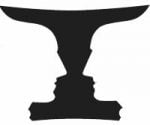

OSHO, WHY ARE YOU NOT CONSISTENT IN YOUR STATEMENTS?
I cannot be. The purpose of my statements is totally different from that of ordinary statements. I am not telling the truth, because truth cannot be told. Then what am I doing here? If you take my statements as true or untrue, you will miss the whole point. I am using the statements to awaken you. They are neither true nor untrue. They are either useful or useless, but they have nothing to do with truth. They have a certain utility.
The mind has a natural tendency to quickly get fixed ideas. It is very much afraid of change, because change means rearrangement. Each time you change something, you have to rearrange your whole inner being.
Mind wants to live with fixed ideas, so when a person comes to me — and it has been happening for thirty-five years continuously — he starts loving me. He comes closer, becomes intimate, and then gets a fixed idea. And that’s where he misses, because now his fixed idea is going to create trouble.
I am not an idea and I am not fixed. I am changing. I am in absolute agreement with Heraclitus that you cannot step twice in the same river. Translated, it means you cannot meet the same person again. I not only agree with him, I go a little further: I say you cannot step in the same river even once. Again translated to the human world, it means you cannot meet the same person even once, because even while you are meeting him he is changing, you are changing, the whole world is changing.
But once you get a fixed idea you cling to it, and I am constantly going to change. Tomorrow you will find yourself in a conflict.
It is just as if you are fast asleep, and I start ringing a bell; there is nothing of truth or untruth in ringing the bell. To ask the question would be utterly irrelevant. But there is something useful in it: if it helps you wake up, it has been useful. Buddha is reported to have said, “Truth is that which has utility.” Truth is a device. It does not state anything about existence, it is just a device to provoke something which is fast asleep in you.
Now I cannot be consistent, because I have to provoke so many people — different types of minds, different types of sleeps are there. I can ring a bell: it may help somebody to wake up, to somebody else it may look like a lullaby and he may fall asleep even more deeply. To somebody it may be a provocation into awakenedness, to somebody else it may simply give a beautiful dream: that he is in a temple and bells are ringing, and he is enjoying, and the prayer is going on, and the incense is burning. He has created a dream; he has not come out of his sleep. He will need something else — maybe a hit on the head, or cold water thrown on him, or a good shaking. Different people need different approaches to be provoked, to be awakened.
My statements are not about truth. I am not a philosopher! I am not trying to give you any philosophy. I’m just trying all possible ways to wake you up. If one way fails, I try another — but I cannot leave you alone. So, one day I will say one thing, another day I may say another thing. You miss the point if you don’t understand the purpose of my statements.
So many have come, so many have gone, and this has been one of the basic reasons: they became so much fascinated with their own idea of me that I became secondary. Their idea of me became primary — and that too, old, dated. I am with them, fresh and young, but I became secondary. And if there was any conflict between their idea and my reality, they went with their idea — even to the point of becoming enemies to me, telling people that I am no longer the same, I am no longer the person I used to be; they have worshipped a great saint, but I am no longer the same person. They will keep their memory of me deep in their heart, but it is simply a photograph. Photographs don’t change.
In Picasso’s home there used to be a portrait, a self-portrait of Picasso. He never sold it, at any price, that was the only picture he insisted on not selling. And the more he insisted on not selling, the more and more people were coming, with bigger and bigger offers for the picture. It became a challenge for art collectors.
One beautiful woman had come with the same idea, to purchase the picture. Whatever the price she was ready to pay; she was rich enough. She said to Picasso, “I am willing to pay you as much as you want for your portrait.”
Picasso said, “People are mad. For a dead thing they go on harassing me. You can have it without any price, but remember, it is not me.”
The woman looked puzzled. She said, “It is not you? What do you mean?”
He said, “If it were me it would have kissed you by now! It does not speak, it does not love, it does not sing, it does not dance. Such a beautiful woman is standing before it and the idiot is not even kissing. You just can take it. It is dead. Remove it from here — it is not me!”
People get fixed ideas — and very soon. Ordinarily it goes perfectly well, because you meet only dead people who are not changing, who go on saying the same thing their whole life just like a parrot. They are consistent people; they have all your respect.
I seem to you self-contradictory, inconsistent, for the simple reason that I have decided not to die before I die. I am going to live to the very last breath, so you cannot be certain about me till my last breath. After that you can make any image of me and be satisfied with it. But remember, it will not be me.
To be with me needs courage, and the greatest courage is being capable of seeing the change and moving with it. It may be difficult; it is easy to have one idea once and then be finished.
A Sufi story… Mulla Nasruddin is appointed as the prime minister of a king because he was known to be very wise; somewhat weird was his wisdom, but still, wisdom is wisdom. The first day when they went to have their dinner together, a certain vegetable called bhindi (Okra or Lady’s finger) was made by the cook, stuffed with Eastern spices. It is a delicacy.
The king appreciated the cook, and after that Mulla said, in appreciation of the bhindi, “This is the most precious vegetable in the world. It gives you long life, it keeps you healthy, it gives you resistance against diseases,” and so on and so forth.
The king said, “I never knew that you know so much about vegetables.”
The cook heard about it, so he thought if bhindi is such a thing that our king can live long and healthy and young… Next day again bhindi was made, and again Mulla praised it, going even higher than the first day. The third day bhindi was made and Mulla went still higher. The fourth day bhindi was made and Mulla was going higher and higher. The fifth day Mulla even said that bhindi is a divine food — God eats only bhindi.
But the king was bored. He threw the plate of bhindi and told Mulla Nasruddin, “You are an idiot. Bhindi… and God eats bhindi every day? You will drive me mad!”
Mulla said, “Lord, you are getting unnecessarily hot. I am your servant; you said bhindi was good, I simply followed you, and when I do something, I do it perfectly. I am not a servant to bhindi, I am your servant. The truth is that bhindi is the worst thing in the world — even devils don’t eat it. You did well that you threw it.”
He threw his plate farther away than the king. He said, “You should always remember that I am your servant, and you are always right. And I am a consistent man; I will remain consistently your servant, whatever happens.”
There are people — almost the whole world — who live in a certain consistency. It is easier. But when you come close to a man like me, you are going to be in difficulty; either you will have to drop your idea of consistency or you will have to drop me. And people are so infatuated with their own ideas that they can drop me, but they cannot drop their ideas.
I have to destroy your ego-structures. Hence, don’t ask me again and again why my statements are not consistent. I have only one consistency: that is of being inconsistent. I am consistently inconsistent; that’s the only consistency that I have. And I have infinite freedom; a consistent man cannot have infinite freedom. I can play, I can joke, I can enjoy shattering your egos, destroying your structures. I’m not serious about these things. I dare to play, to try first one thing, then another. My statements are like the actors on the stage: let them contradict each other; they are not there to tell the truth, but to provoke it, to discover it.
And I would like to tell you too: do not do anything merely for the sake of consistency. That is the shelter for fools and philosophers — which are the same people. Never do anything just for the sake of consistency. This is undesirable since it limits experimentation and exploration. Action so as to be consistent with the past develops into a programmatic addiction. It freezes you into stasis, halting the evolutionary march of becoming. You should retain all power over current behaviour. None should be yielded to the past. Acting consistent with precedent is a form of death and destroys all potential to grow into understanding.
Remember, what is consistency? It means my today has to be obedient to my yesterday — that is consistency. My present has to be obedient with my past — that is consistency. But then how am I going to grow? Then how am I going to move? If I remain consistent with the past, then there is no growth possible.
Growth means inconsistency. Your today has to go beyond your yesterday, has to be inconsistent with it, has to use it as a stepping-stone, has not to be confined by it. And your tomorrow has to go beyond your today. If you go on moving away from your past each day, you will be growing, you will be reaching higher peaks.
Consistent people are stupid people. Their life is stagnant. They stink of death. They are like corpses: they go on rotting, they don’t live. Life is basically not a logical phenomenon but a dialectical phenomenon. Dialectics means thesis, antithesis. synthesis: your yesterday was a thesis, your today will be its antithesis and your tomorrow will be a synthesis. Again, your tomorrow will create a thesis and the next day an antithesis. and then synthesis — and so on it goes. You go on in a dialectical way. Life is a dialectical process; it is not a linear, logical process. Life is a contradictory process.
That’s why I cannot define myself — because today’s definition won’t be applicable tomorrow. I cannot define myself because it is like defining a cloud or an ocean or a growing tree or a child. I constantly change, because change is the very soul of life. Except change, nothing is eternal.
I am committed to change. Change is my God, because that is the only unchanging phenomenon in life. Hence, I call it God. Everything else changes: life changes, death changes — only change remains. I worship change. I am in love with it. I cannot define myself once and forever. I have to define myself each moment of my life; and one never knows what each next moment is going to bring.
To be with me is to be in a constant flux, in a constant movement. Those who are not daring enough sooner or later have to drop out of this journey that I am taking you on. Those who are not courageous enough, who don’t have guts to accept the unknown future and to remain available to the unknowable and the mysterious, and who are in a hurry to have a dogma, a belief system, a philosophy — so that they can stop growing, so that they can cling to the dogma, so that they can become fanatics about the dogma; those who are constantly in search of a certain orthodoxy in which nothing will ever change — these are the dead people, cowards. They can’t become my people.
I’m bringing you a totally different kind of religion; it has never happened before in the world. All the religions in the world were believers in permanence; I believe in change. All the religions of the world were dogmatic; I am absolutely non-dogmatic, anti-dogmatic. All the religions of the world were reduced into philosophical statements. When I will be gone, I will leave you in such a mess — nobody will ever be able to reduce what I was saying, really. Nobody will be able to reduce it into a dogma.
Osho: The Secret of Secrets, Vol 2 Chapter #2: Chapter title: Love is the only friend (excerpts)
Osho: Beyond Psychology Chapter #16 : Emptiness has its own fullness Q 2 (excerpts)
I enter 2026 willing to be inconsistent – with my past, but faithful to my growth.
बात उल्टी वो समझते हैं जो कुछ कहता हूँ
अब की पूछा तो ये कह दूँगा कि हाल अच्छा है……………..जलील मानिकपूरी
baat ulTī vo samajhte haiñ jo kuchh kahtā huuñ
ab kī pūchhā to ye kah dūñgā ki haal achchhā hai…………Jalil Manikpuri
They take my words the wrong way, whatever I say.
So next time they ask, I’ll just tell them that all is well.
While reading the blog “Consistently Inconsistent,” the lines of this delightful song came to mind — “Kabhi kuch kehti ho, kabhi kuch kehti ho, zara nazar ko sambhalna! Hāl kaisa hai janāb kā?” from the film Chalti Ka Naam Gaadi (1958), written by Majrooh Sultanpuri, composed by Sachin Dev Burman, and sung by Asha Bhosle and Kishore Kumar.
हाल कैसा है जनाब का Haal Kaisa Hai Janab Ka (COLOR)HD – Asha Bhosle,Kishore Kumar | Ashok,Madhubala.
Change is the most consistent, can’t be created or destroyed, hence is god! Lots to ponder 🤔
Thank you for putting it out here!
Gre8. What a beautiful way Osho have explained the nature of Mind as it gets bored with consistency, same ideas every day and want different stuffs in life.
The truth is still the same but depends upon the way we look at it. For example when we look a diamond with different angles but it’s still the same diamond.
Again every soul has its own journey so there can’t be a universal way ( or the same way) to treat every person, hence Osho say the same thing but people accept as per their individual capacity and depth or may be different treatment for each soul..
Very well explained Sir..
Kund regards.🙏👍
You are unbelievably consistently compelling with very deep philosophy presented ever so simply!!!!
Rajiv love your consistency…..