
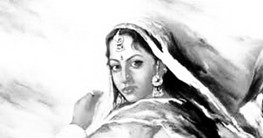
8th of March is celebrated as International Women’s day every year around the world. It is a symbol of showing our respect and valuing their importance as a half part of this society.
Women is the unique half part of human consciousness and deserves total freedom. Osho says The woman is capable of producing life; man is not. In that way he is inferior, and that inferiority has played a great role in the domination of women by men but there is no need for man to feel inferior to woman, they belong to one humanity, and they both have complementary qualities. They both need each other, and only when they are together, are they whole.
He says women has a quality of harmony, peace, serenity, patience, silence and man has the quality of courage, adventure, rebel, leadership, exploration. Both are incomplete as alone. A great society could be raised if both contribute together to it.
The woman is capable of producing life; man is not. In that way he is inferior, and that inferiority has played a great role in the domination of women by men. The inferiority complex works in this way: it pretends to be superior –to deceive oneself and to deceive the whole world. So man down the ages has been destroying the woman’s genius, talents, capacities, so that he can prove himself superior –to himself and to the world.
The female is more serene, more silent, more patient, is capable of waiting. Perhaps because of these qualities she has more resistance to diseases and she lives longer than a man. Because of her serenity, her delicateness, she can fulfill a man’s life immensely. She can surround man’s life in a very soothing, cozy atmosphere. But the man is afraid –he does not want to be surrounded by the woman, he does not want to let her create a cozy warmth around him. He is afraid because that way he will become dependent.
The woman can be of immense help in creating an organic society. She is different from man, but not unequal. She is as equal to a man as any other man. She has talents of her own which are absolutely needed.
It is not enough to earn money, it is not enough to become a success in the world; more necessary is a beautiful home, and the woman has the capacity to change any house into a home. She can fill it with love; she has that sensitivity. She can rejuvenate man, help him relax.
Q: ACCORDING TO YOU, WOMEN ARE CLOSER TO THE WHOLE THAN MEN. HOW COME SO FEW WOMEN ATTAIN ENLIGHTENMENT THEN?
NOT SO FEW. Exactly the same number of women attain to enlightenment as men, but they don’t fuss about it as much as men – that’s all. They don’t advertise it as much as men. They enjoy it. That is how woman, the feminine being, is.
Man enjoys talking about his enlightenment more than enlightenment itself. He is interested in how many people have come to know that he has become enlightened. Women are not worried. They are not worried at all. If it has happened they enjoy it, they nourish it deep inside. It becomes a pregnancy. They live with it; they don’t talk about it. That’s why you don’t know many names. Only a few names are known and those are of women who had some quality of man in them, that’s why you know. Otherwise you would not have known them.
Five thousand years ago, when the UPANISHADS were being written, it was the childhood of mankind, and man had not yet become so brutal against women. It is said that the king – Janak, had called a great debate among all the learned people of his kingdom to decide the ultimate question: What is reality? He was himself very philosophically minded. It was going to be a great discussion and all the learned people, all the pundits of the country gathered together. And there was going to be a great prize for the winner – one thousand cows, the best of the country, with gold-covered horns, with jewelry around their necks. They were standing there outside the palace – one thousand cows. Whosoever won the debate would take the cows.
Yagnavalkya was one of the most famous and learned men of those days. And he was so confident of his victory that when he came to the campus where the debate was being arranged, he looked at the cows. Those one thousand cows with gold-covered horns, studded with diamonds, were looking really beautiful in the sunlight. He came with his disciples – he was a great teacher – and he was so arrogant, as scholars are, that he told his disciples, ”You take these cows to our Ashram. I will decide the matter later on, but you first take these cows because it is too hot and the cows are suffering from the heat. It is unnecessary for the poor cows to stand in the hot sun.” He must have been very arrogant – so certain.
Only ignorance is so certain. Wisdom is always hesitating because it is so vast– and how to decide the ultimate nature of reality? Who can decide it?
The disciples said, ”But first you have to win.”
He said, ”That I will take care of.”
All the other scholars were offended but they couldn’t say anything because they knew that they could not defeat this man in argument. In argument he was superb. Even King Janak could not prevent him. And all those thousands of wise men who had gathered – they could not prevent him. They all knew that it was impossible to beat him in argument. His disciples took away those one thousand cows. And Yagnavalkya was winning against other learned people; one by one, whoever stood against him was defeated immediately.
And it was almost the moment when he was going to be declared the winner, when a woman named Gargi… she was waiting for her husband who had also gone into the debate, and it was getting late; so she went herself to call him. She entered the campus and she saw the whole scene – that the cows had been taken away even before victory.
And she said to the King, ”Don’t declare his victory. Just by chance I have come here, to look for my husband. But this man needs somebody who really knows, and I am ready to have a discussion with him. He is only a learned man, but learning has never known truth.”
Those were more beautiful days, when even a woman could challenge the most learned man. And the emperor said, ”Then I will have to wait. You can discuss.”
Gargi said, ”You will have to bring those cows back. You have not won the debate – I am here. I will ask a few questions and you will be finished.” Even Yagnavalkya became afraid. Nobody had behaved like this with him, and a woman…??
She asked only simple questions. She asked, ”Who created the world?” And Yagnavalkya laughed, thinking that this woman was asking a childish question. But he was wrong.
He said, ”God created it – because everything that exists has to be created by someone.”
Gargi said, ”Do you think God exists? – then give the evidence.”
There is no argument that can prove God’s existence – either you believe or you don’t believe, but belief is not an argument. It is simply failure of your nerve. Yagnavalkya remained silent. She asked, ”Can you tell me if anybody created the world?”
He said, ”Yes, God created the world.”
Gargi laughed. On that beautiful, auspicious occasion, her laughter was immensely beautiful. She said, ”Are you sure? Were you a witness? Or have you any other witness, who has seen you seeing God creating the world?”
She said, ”You are caught; now you are in trouble. Who created God? – because he also exists, and everything that exists needs a creator.”
Yagnavalkya saw that he had got into difficulty. Because if he said another God created him, the question will remain the same: Who created that other God? You can go on answering for a thousand times, but the question will remain the same: Who created the first God? And if there was somebody to create him, he cannot be called the first.
Now, this was difficult. Nobody had ever witnessed it. And the problem was, if Yagnavalkya said, ”I witnessed,” that meant the world was already created. What were you witnessing? – you are the world. Certainly, the beginning cannot be witnessed. And if it cannot be witnessed, it cannot be proved.
And Gargi said, ”Neither is there God, nor is there any beginning, nor is there any end. These are all things which the parasite priests have invented, imagined, propagated… all kinds of nonsense and superstitions.”
Yagnavalkya was known to be a silent, peaceful man. He forgot all about silence and peace, and got so angry that he pulled out his sword and said, ”Woman, if you don’t stop, your head will fall on the ground!”
But Gargi said, ”Put your sword back into the sheath. Swords cannot be arguments.” And she told King Janak, ”Tell this fellow that those one thousand cows should be returned.”
Now, the sword is not an argument. And Yagnavalkya had to return, in deep shame, those one thousand cows. When they were returned, Gargi said, ”You can keep them. I am not interested in cows and gold. I was interested to see how much understanding you had.”
She was the first known enlightened woman.
There is a subtle balance somewhere. In fact, for each man a woman exists; for each woman a man exists – they are part of one whole. Whenever one man becomes enlightened, one woman has to become also. Because one man is freed out of existence, now he will not be coming back; he will no more enter into a womb, into the world. Somewhere one woman has to be relieved of the bondage.
So this is my reading: as many men as women, the same number, have become enlightened, but women are not known because they don’t make a fuss about it. They enjoy it.
There is no need for man to feel inferior to woman. The whole idea arises because you take man and woman as two species. They belong to one humanity, and they both have complementary qualities. They both need each other, and only when they are together are they whole…Man and woman are neither equal nor unequal, they are unique. And the meeting of two unique beings brings something miraculous into existence.
Now, such women indicate that if man had not repressed them… my own understanding is that more women would have become enlightened than men, because man’s mind is full of rubbish.
And man’s mind is much more outgoing. He may go to the Everest… Just think of Edmund Hillary standing on the Everest, how stupid he must have looked. And for only these two minutes he was on the Everest, he risked his life. Because the woman is heart-oriented there is more possibility of her being awakened. Man is more logical, more arithmetical. Perhaps he can become a great scientist, but a woman is more poetic – potentially, but we have not allowed her. She can be a beautiful dancer; she can be a musician. She will open new avenues of enlightenment through the heart. Love will become her god.
The day woman’s greatness is accepted, her uniqueness is accepted, her freedom, her individuality are respected, the world will be filled with more love, more flowers, with more fragrance.
Osho: Hari Om Tat Sat: CHAPTER 23. A WOMAN IS MORE POETIC (excerpts)
Osho: Tao: The Three Treasures, Vol 1: CHAPTER 4. EMPTINESS Q 4 (excerpts)
Osho: The Razor’s Edge: CHAPTER 16. WHO CREATED GOD Q 2 (excerpts)
Osho: The Sword and the Lotus: Chapter title: Something of the sacred: Chapter #5 (excerpts)
HAPPY INTERNATIONAL WOMEN’s DAY !!!
इस सादगी पे कौन न मर जाए ऐ ख़ुदा
लड़ते हैं और हाथ में तलवार भी नहीं………………….मिर्ज़ा ग़ालिब
ees sādgī pe kaun na mar jaa.e ai ḳhudā
laḌte haiñ aur haath meñ talvār bhī nahīñ……………..MIRZA GHALIB
Who would not be captivated by such simplicity, O God?
They wage their battles and yet hold no sword in their hands.
On this International Women’s Day, as I reflect on Osho’s profound insights about the feminine consciousness – its serenity, patience, creativity, and silent strength – the song “Kudi Nu Nachne De” from the film “Angrezi Medium” (2020) feels like a modern echo of that ancient truth. When the song says “let the girl dance,” it is not merely about celebration; it is about permission – permission for a woman to exist fully, to express without fear, to think without suppression, to question like Gargi, to create life, to nurture love, to awaken silently without the need for applause. For centuries, the feminine genius was restrained by insecurity and domination; today, the call is simple yet revolutionary: let her dance in her freedom, in her individuality, in her enlightenment. Because when the woman dances, it is not just she who is liberated – the whole society finds its rhythm, balance, and wholeness.
(Song lyrics by Priya Saraiya, sung by Vishal Dadlani, Sachin-Jigar and composed by Sachin-Jigar.)
Kudi Nu Nachne De:Angrezi Medium|Anushka,Katrina,Alia,Janhvi,Ananya,Kriti,Kiara,Radhika,Sachin-Jigar