IN DISCOURSE WHEN YOU SAY THINGS LIKE, “LIVE TOTALLY IN THE MOMENT,” I ALWAYS THINK, “OF COURSE!… THAT’S IT! FROM NOW ON I AM ALWAYS GOING TO DO THAT.” AND OF COURSE, A MOMENT LATER I HAVE FORGOTTEN ALREADY. IN EVERY DISCOURSE I DECIDE THE TIME HAS COME TO BE MORE MEDITATIVE, MORE RELIGIOUS, MORE LOVING, MORE AWARE — AND I IMMEDIATELY FORGET.
You listen to me talking about living totally, intensively… moment to moment, living now, living here and you say to yourself, “Of course, that is it! I am going to do it.” It is not that later on you forget it; you have already forgotten it. By saying, “Of course! this is it,” by deciding that you are going to do it, you have already postponed it for tomorrow; by deciding that you are going to live this way, you have already missed the point.
You think that later on you find you have forgotten it just a moment afterwards. You are not forgetting it just a moment afterwards; you have not listened to it at all! Otherwise you would not say, “Of course! This is it!” You would simply understand it non-verbally. You would not verbalize it, because in verbalizing it you are missing the moment… the moment is a very small thing.
Your mind is really deceiving you. Your mind is saying, “I have understood it, don’t be worried. Of course, this is it! We are going to live this way.” But when? The question was now, and your mind has already postponed it. The question was here, and the mind has already brought the future in. It is not that you forget later on; later on you only recognize that you have forgotten. But the truth is that you have not even understood, because if you understand it there is no possibility of forgetting it.
A truth has a quality: understood, it is impossible to forget it.
That’s why if you are a man of truth, you need not remember it, but if you are accustomed to lying then you need a very good memory, because then you have to remember continually what lie you had told this man yesterday, and you have to repeat the same lie — because meanwhile you may have been lying to other people, about other things. A liar has to be very alert, and if he is caught, then he has to be very logical, almost a sophist, so he can manage.
One Sufi story is that Mulla Nasruddin was chosen by the Shah of Iran to go to the king of India as his messenger, to make a friendship between two great countries. All the other important people in the court of the Shah of Iran were very jealous. They were trying in every way to spoil Nasruddin’s journey, to create in the mind of the king antagonism against Nasruddin, and they were spying on Nasruddin to find out what he was doing.
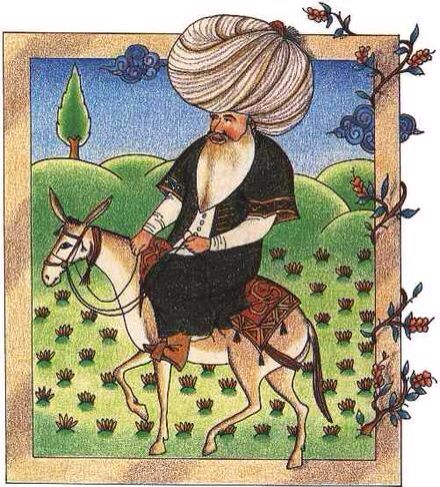
What Nasruddin did was this: he went to the emperor of India, and before the whole court of the emperor he said, “Seeing you is a great privilege to me. My king, the Shah of Iran is just a young moon — just two days old. You are a full moon.”
The emperor was certainly very much impressed — that the ambassador of Iran is comparing him not with a two-day old moon, which is rarely visible for a few minutes, but with the full moon! He gave him many presents to give to his king and said, “Let him know that I am very much pleased with his messenger.”
But the spies of the Shah’s court, the conspirators against Nasruddin, had reached the Shah’s court before him. They told everyone that Nasruddin had insulted the Shah of Iran, calling him just a young moon, two days old, and had compared him with the emperor of India by saying that the emperor of India is a full moon, perfect in its glory!
Naturally the Shah of Iran was very much offended. He said, “Let that Nasruddin come! I used to think that he is a wise man, but he seems to be very cunning.” Nasruddin came with big, valuable presents, but the Shah was angry. He said, “I don’t want any presents. First you have to give the explanation to me: is it right that you compared me with the emperor, saying that I am just a two-day old moon, and he is as the perfect full moon?”
Nasruddin said, “Yes, and the emperor is a fool! He did not understand my meaning.”
The Shah said, “What is your meaning?”
He said, “My meaning is that the full moon is on its deathbed, from tomorrow it will start declining. The two-day old moon is on the increase: tomorrow it will be bigger, the day after tomorrow it will be even bigger! So my Shah of Iran is expanding, becoming bigger and bigger. The emperor does not have any future — my Shah has a future; he has only past, and his future is death.”
The Shah of Iran was very impressed. He gave all the presents that were given by the emperor of India for him to Nasruddin, and he gave many more presents to Nasruddin, and told him, “You are really a wise man.” And the whole court was silent, seeing that the whole thing had changed completely: “This Nasruddin is really a strange fellow; we had never thought that he would interpret it in such a way.”
That night they went to see him, because now he had become the most important man in the court, second only to the Shah, and they all praised him. He said, “Don’t be bothered – – I am just an incurable liar! Whatever the situation is, I manage somehow to interpret it in such a way that it appeals to the party concerned: both the India emperor and the Shah of Iran are very naive! And I am just an incurable liar. I don’t mean anything!”
Truth has a quality; it has a validity which is intrinsic. You need not prove it; its experience is its proof. No other logic is needed.
So just look into your acts, into your thoughts, into your feelings: you will find the armour everywhere. Wherever you see fear, you have created it. It was needed at one time – now it is no longer needed. A simple understanding that it is no longer needed… now it is a barrier, a hindrance, a burden. If you find something truthful, it will have its own validity.
But in the armour you will not find anything that has any connection with truth. The whole armour is made of fear — layers and layers of fear.
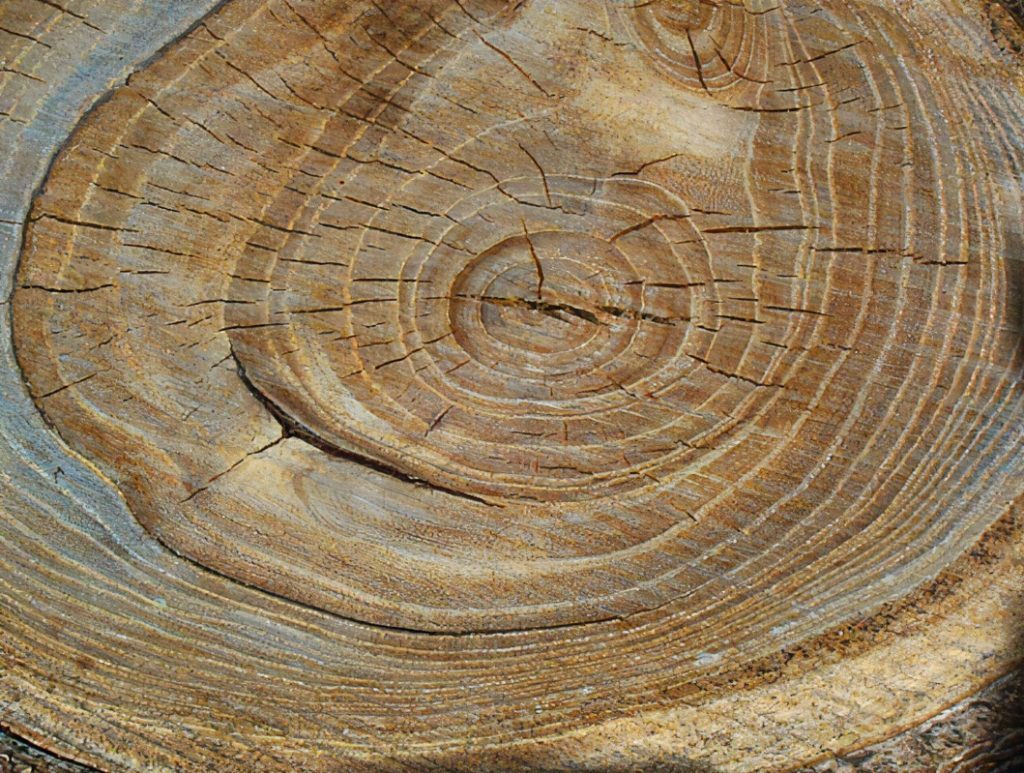
The woodcutters and the scientists who work with wood, count the age of the tree from the layers of the bark. When you cut a tree, you will see layers of the bark on the trunk.
Each year the tree gathers one layer — that’s how they manage to know how old the tree is. There are trees which are four thousand years old; they have four thousand layers.
Your armor has also as many layers as you have lived. Not one every year; perhaps one, two, three — it depends on conditions: what kind of upbringing, what kind of education, what kind of people you have lived with. But each year you are collecting layers, and the armour goes on becoming thicker and does not allow you to touch life. There is such a gap between you and life.
You are carrying an imprisonment around yourself. But because you yourself have created it, you are capable of dropping it any moment… this very moment. But don’t postpone, don’t say, “I will do it tomorrow.” Tomorrow never comes. And when I am saying, “Do it…”in fact doing it is not needed; just seeing is enough. If you have seen it, don’t verbalize it: “This is it,” because in verbalizing it you will miss — the moment is gone. Without verbalization, just see it and it will evaporate. It has no substantiality. It is not something real. It is something unreal that you have created, and this goes on happening every day.
I tell you to live intensely herenow, but the barrier which is there immediately shifts it into the future. You feel that you have understood it; right now it will shift it towards the future and give you the feeling of understanding. But next moment you will have forgotten it, because in the first place you had not understood it at all. Understood, it is never forgotten.
My professors in the university were very angry with me because I would never take any notes, and every other student was taking notes. They would see me just sitting, and they would ask me, “Don’t you want to take notes?”
I said, “There is no need. I am trying to understand, and if I understand it, there is no need of any notes; the understanding will remain with me. Understanding becomes part of your blood, part of your bones, part of your marrow. These people who are taking notes are the ones who are not understanding. They are thinking that by taking notes they will be able to remember — but what will they remember? They have not understood in the first place. These notes will be dead. Perhaps they will be able to repeat these notes in the examination papers.
In my own class, when I became a professor in my own turn, I prevented it completely…nobody could take notes. I said, “The mind can do only one thing at a time, so try to understand so that you need not sneak notes into the examination.” First my students were very much puzzled. They said, “Every professor says, `Take notes, so you don’t forget.'”
I said. “The question of forgetting arises only when you have not understood. I am saying, `Understand, and don’t worry about forgetting.’ Anything understood is never forgotten, and anything not understood is bound to be forgotten.”
So that’s what is happening…. I say, “Live now.” You say, “This is it! Enough is enough, now I am going to live moment to moment.” But why the decision?
Just start! Whatever you are doing here… you are listening here, just listen. There is no need to verbalize it. The mind is a commentator — it goes on commenting — but if you try intensely to hear, the commentating mind will stop because it is a question of energy.
You have a certain energy. If you stake the whole energy in listening, then this continuous commentary in the mind automatically stops. It has no more energy; you are not nourishing it. And yes, it is true: it is going to happen in spite of you. How long are you going to not listen to me? Just tired, one day you will say, “Let us listen!
Osho: Beyond Psychology Chapter #33 Chapter title: Prayer — your psychological armour Q 2 (excerpts)
उस के चेहरे की चमक के सामने सादा लगा
आसमाँ पे चाँद पूरा था मगर आधा लगा……………. इफ़्तिख़ार नसीम
us ke chehre kī chamak ke sāmne saada lagā
āsmāñ pe chāñd puurā thā magar aadhā lagā………….. Iftikhar Naseem
In front of the glow of her face, it appeared ordinary
though there was a full moon in the sky, looked half.
We talked about moon so much in this story that ye Ghazal to banti hai…An amazingly beautiful ghazal by Ibn-e-Insha :- kal chaudhvīñ kī raat thī shab bhar rahā charchā tirā, kuchh ne kahā ye chāñd hai kuchh ne kahā chehrā tirā was sung by Jagjit Singh ji (And also by Ghulam Ali ji)
Ibn e Insha (1450) Kal chaudhvin ki raat thi Live HQ Ibn-e-Insha Jagjit Singh post HiteshGhazal – YouTube
What a great writings for understanding mind and its playing trick with all of us. As rightly said mind always creates confusions and enjoy within its boundaries. The only way out is to UNDERSTAND ( or digest)..and not make a note!!..
Thanks for sharing Sir..
Kind regards.🙏
Amazing read. What you understand stays with you.. incredible. !!!!!